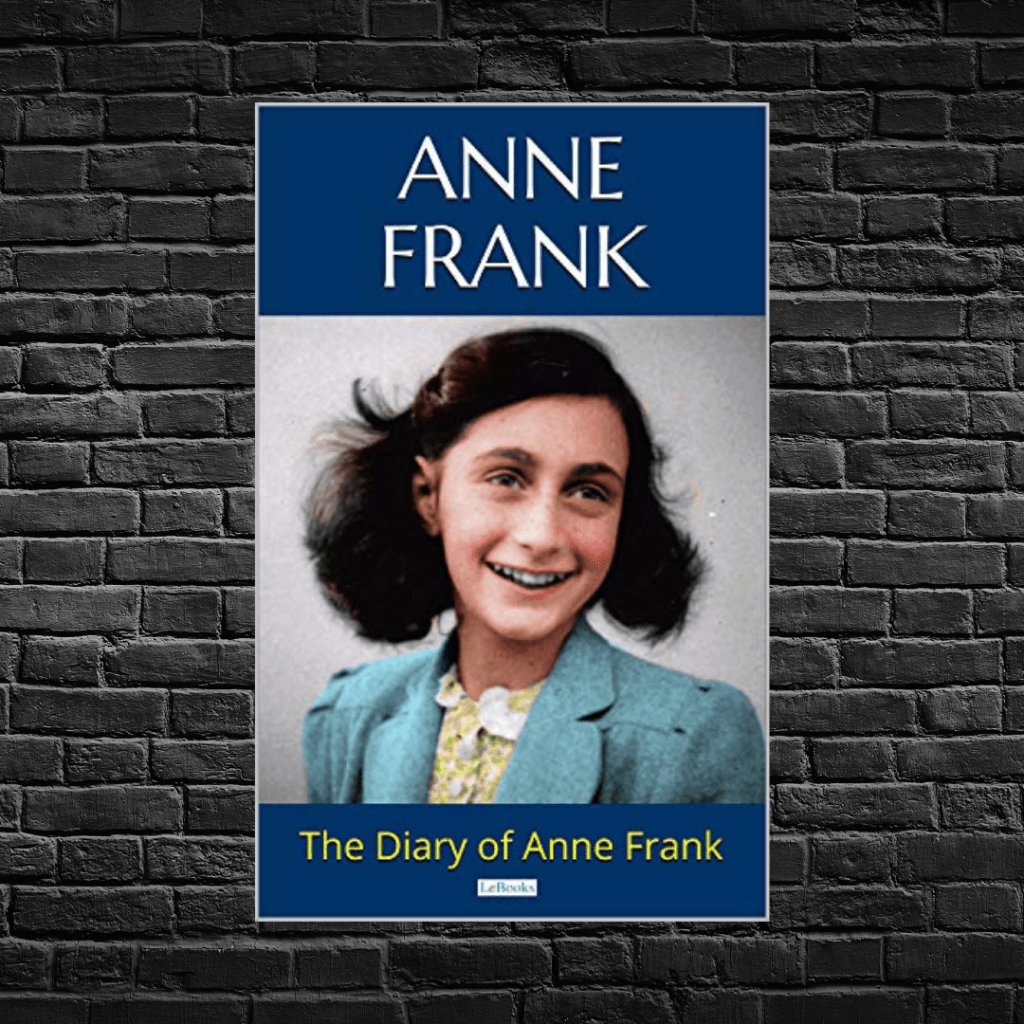
The Diary of a Young Girl, often known as the Anne Frank Diary, is a collection of entries from Anne Frank’s Dutch-language diary, which she recorded while a thirteen-year-old Jewish girl and her family evacuated their house in Amsterdam and went into hiding in 1942, when Nazis occupied Holland. Anne Frank died of typhus at the Bergen-Belsen detention camp in 1945, after the family was captured in 1944. Anne Frank kept a diary throughout this time, recording vivid recollections of her events. Her tale is a fascinating commentary on human tenacity and weakness, as well as a riveting Self-Portrait of a sensitive and energetic young lady whose promise was sadly cut short. Miep gies were able to retrieve the diary.

🌟🌟🌟🌟🌟
I felt compelled to read this after my trip to Amsterdam, and it still took me over a year to finish it. I read the first half of this and then listened to the audiobook version of it read by Helena Bonham Carter.
One of the things that truly irritated me when I visited Amsterdam was the amount of people who stood outside the secret annex and posed for photos like they were meeting a celebrity. It gave off a certain level of disrespect that filled me with distaste.
Anne Frank is arguably one of the most famous people from WWII, I cannot even fathom how she must have felt and how she had to cope. The subject of WWII is a part of history that I am incredibly interested in. I read and watch a lot in regard to the topic.
Anne’s diary is incredibly captivating and there are two distinct writing styles, once when she enters the Annex and later when she becomes more mature. I didn’t visit the inside of the Annex when I was in Amsterdam but I have seen the online interactive tour of it. I have recently watched the doco-drama by National Geographic about Meip Geis, so that portrayal of the Annex was very present in my mind by the time I started listening via audiobook.
I switched from reading to audiobook because while I was reading myself, I was very aware of who had written the diary and how I kept emotionally blocking myself from reading further. Helena Bonham Carter puts such amazing characterisation to the words that I could listen to the story, understand what was being said, and not feel like I was leading myself to the gallows.
I read in an interview with Meip Geis, where she said she didn’t read the diary till years after its publication and when she did read it, she was glad she hadn’t read it when she’d found it or she’d ‘have to burn it because of all the incriminating information it contained.’
Anne did make the names slightly different but it wouldn’t have taken a genius to work out who she was referring to. I think, in my minds eye, I had expected a poorer style of living in secret. I was surprised that despite their confinement they managed to live secretly yet not so differently. There were still presents for birthdays for example and trips down into the office to listen to the radio.
It is of course completely tragic that out of the eight of them, Otto was the only survivor but I do find that I drew comfort from the fact that Anne died from Typhus and not from extermination, starvation, or any other devious method of mass destruction.
There is a rather significant moment in the diary where Anne talks of wanting to remembered for her writing and her dreams of becoming a journalist after the war. I don’t imagine she ever thought she’d be remembered for this long or that her diary would be read by millions. I like to this that would have made her smile.

 At the End of the World is a Book