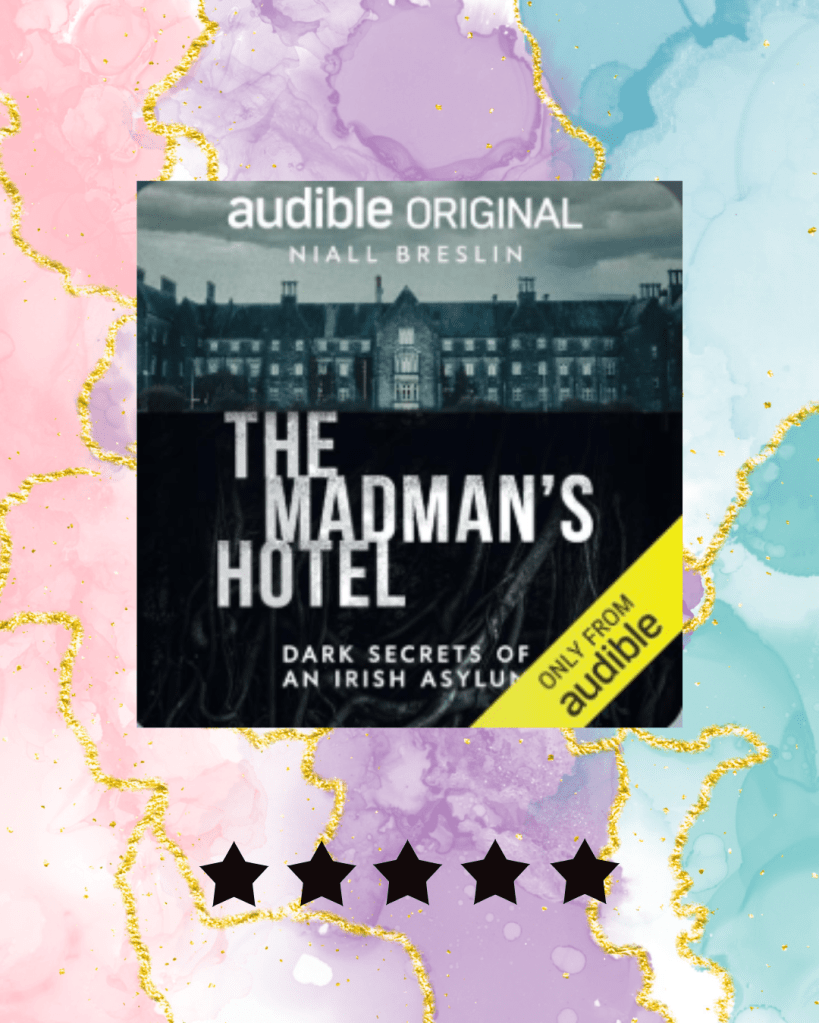
In the heart of the rolling green hills of Ireland a huge abandoned psychiatric asylum looms large and holds its secrets close, until one family fights to find the truth about their long-lost great grandmother.
Presented by Irish mental health advocate Niall Breslin – this is the untold story of the quest to find patient Julia Leonard, alongside many others, who came to die in St Loman’s Hospital near Dublin. Why was Julia in St Loman’s? And what happened to her and other patients who found themselves within its walls? Niall joins the campaign to find out the truth, as he knows the hospital well… he grew up in the town next door.
As the family reach out for Niall’s help, along the way he reveals Ireland’s dark history with ‘lunatic asylums’ and why so many of its citizens were locked away in these forbidding institutions.
Will they find the woman they’re looking for? Will there be justice for her and the other souls once detained behind those walls? And what other secrets will be uncovered?
This series references themes around mental health and death. There is some strong language at times too. We also use historical language – some of which is inappropriate or offensive – but was normalised at the time and is important to include for context.
This was a commute drive listen over several days. It was incredibly thought-provoking and forced me to engage in the darkness that we humans are responsible for. It follows the journey to remember lost loved ones who were abandoned at St Loman’s. I say abandoned because very few people in these asylums were actually ‘insane’.
We talk about mental health today in a much more positive light, while still recognising that there is a way to go. However, our ancestors didn’t understand mental health at all, and that is seen in the procedures they inflicted on the patients in the name of ‘experimental therapy’. Nowadays, we hear a lot of trauma stories coming out of the woodwork of terrible things we did in the past and I think the narrative, while becoming more open, is still designed to ignore and hide what has happened.
In this listen, the opposing body was the HSC. The HSC is (HSC) is the publicly funded, integrated health and social care system in Northern Ireland. It provides free, comprehensive services, including hospitals, GP care, and social services, managed by five regional trusts. The system is overseen by the Department of Health, and it combines health and social services under one umbrella. When the English gave Ireland back to the Irish, it was the HSC that took over all the ‘English’ asylums and as Niall said, this could have been a chance to change the state of things, to improve life and treatment for the patients there, but instead they continued the same route that had already proved ineffective.
Niall meets with several families over the course of this listen, Julia Leonard’s family being the most prominent. It is unapologetically raw about Julia, what happened to her, how she ended up at St Loman’s and why her family are desperately seeking her now.
I thought I had a good understanding of the kind of normal and afflicted people who were sent to asylums, but hearing Julia’s story opened up another world of actions that I hadn’t anticipated, or thought could be a justified reason for committing someone. It made me think about the viciousness that we humans carry and how the actions of one affect many.
In my opinion, the HSC have made things a lot more complicated than they needed to be. I can understand that it is a delicate subject and that there are a lot of families involved with different feelings but their actions during this listen are more in-line with wanting to ‘ignore’ the past and ‘bury’ all of the atrocious things that were done there. Their unwillingness to give information, to acknowledge the problem, and to give much needed information to the families involved was frustrating. The amount of times I rolled my eyes during this was unbelivable.
I’ll never understand the point of view of covering up past actions. They were in the past. You can’t change the past. At least you can bring closure to the present. And I do get it, information can bring court and open the body up to being sued but in this instant, at least, I feel that the goodness that would come from all information to be released, for gravestones to be returned, and a proper burial site erected, or archaeological dig approved, would outweigh any immediate court summons for acts that took place over 100 years ago.
 At the End of the World is a Book